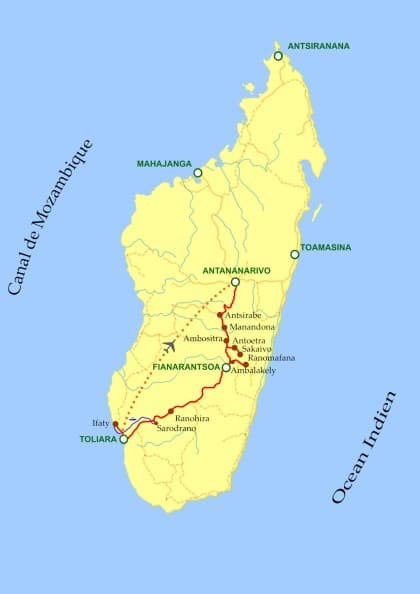
Antsirabe: the first stop on the RN7
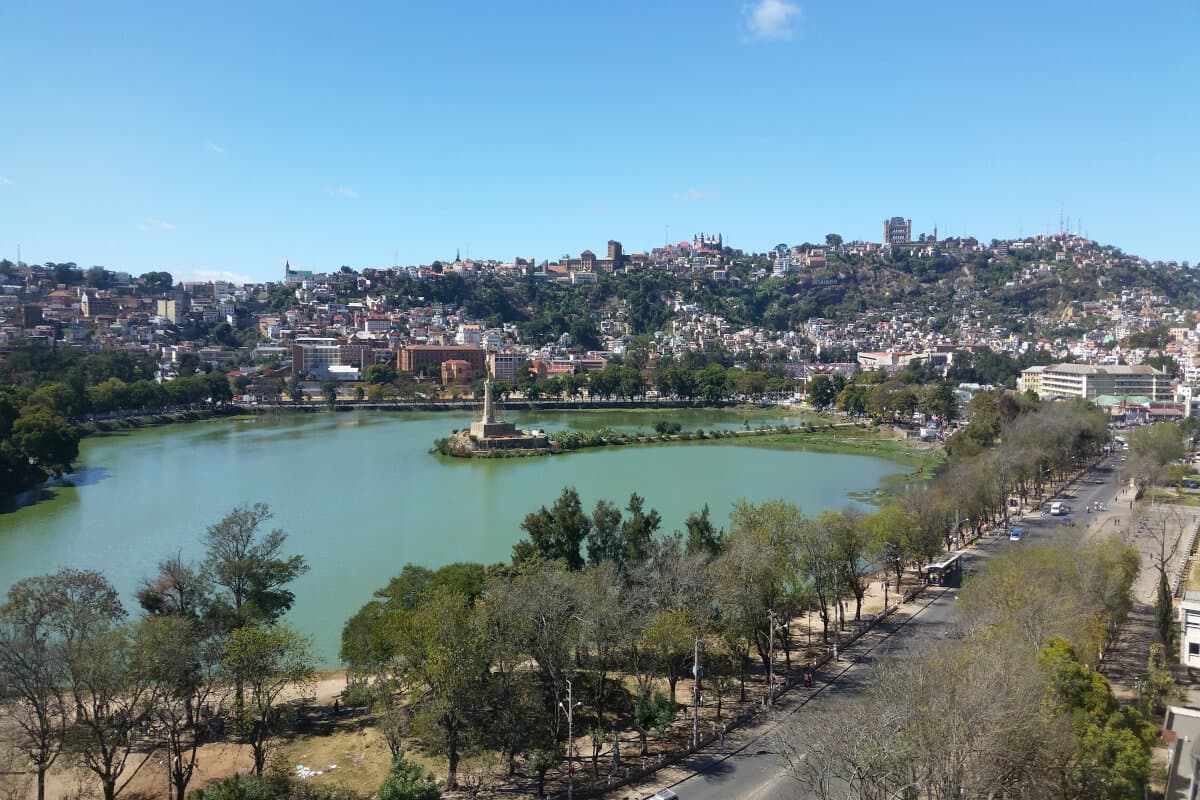
Antsirabe is a highland spa town a few hours south of the capital. Ride a pousse-pousse, the local rickshaw, and visit small workshops that turn zebu horn and recycled metal into crafts. Nearby, Lake Tritriva fills an old volcanic crater.
Most travellers spend one night here. See our full guide to things to do in Antsirabe.
Ambositra and the Zafimaniry woodcarvers
Ambositra is the woodcarving capital of Madagascar. Shops line the main street with boxes, furniture and marquetry. The Zafimaniry people in the hills nearby are known for their carved wooden houses, and UNESCO lists their woodcraft as cultural heritage.
A short stop is enough for most people. If you love crafts, add a night and a guided walk to a Zafimaniry village.
Fianarantsoa and the road to Ranomafana
Fianarantsoa has an old upper town with churches and narrow lanes. The countryside around it has tea plantations and rice terraces. It is also the start of the FCE railway down to Manakara on the east coast.
From here, a side road leads east to Ranomafana. This hilly rainforest is home to the golden bamboo lemur and many other species. Stay two nights for a day walk and a night walk. Read more on the Fianarantsoa page.
Ambalavao and Anja reserve
South of Fianarantsoa, Ambalavao is known for Antemoro paper, made by hand with pressed flowers. The town also holds a big weekly zebu market, one of the largest in the country.
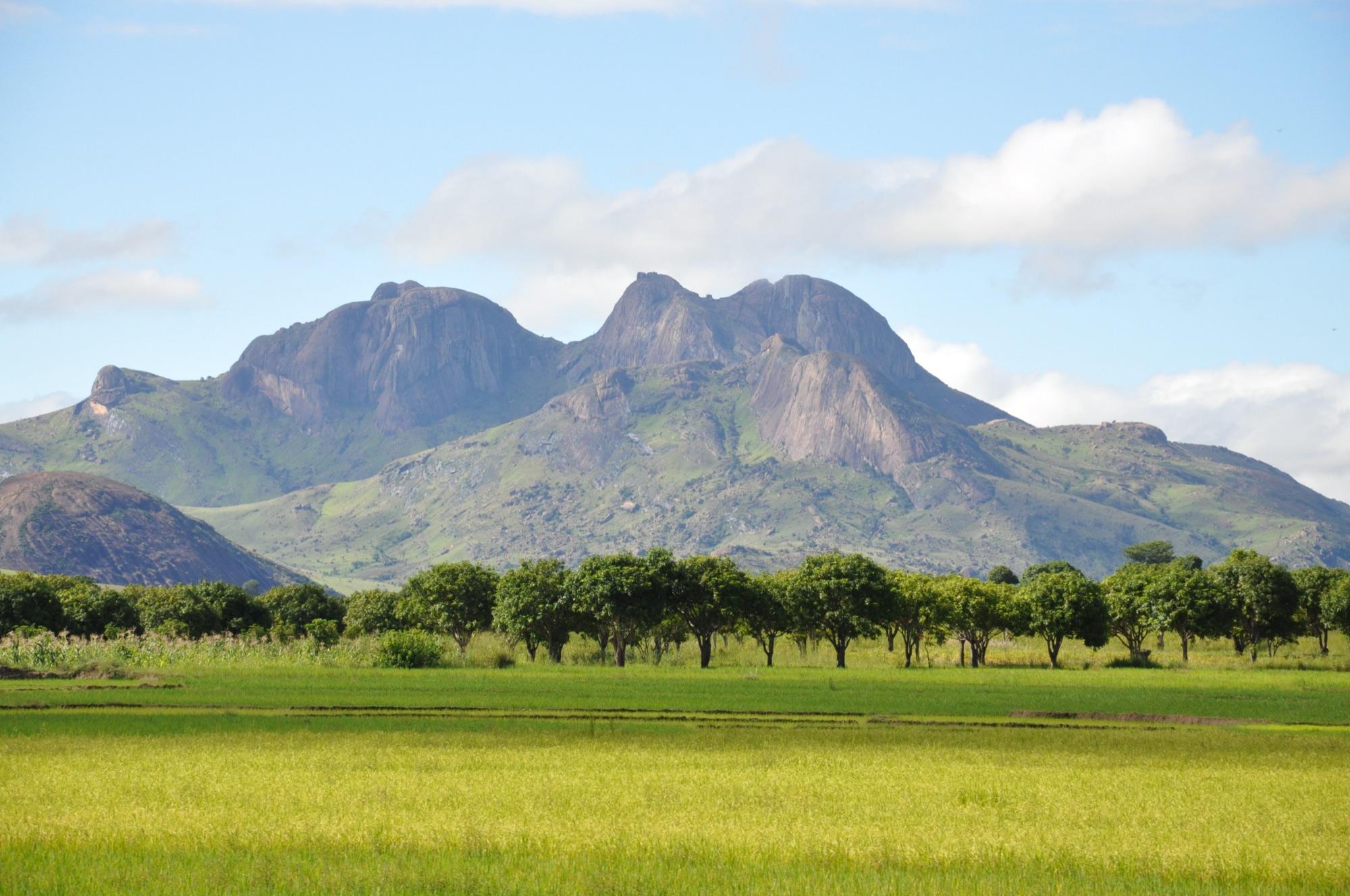
Just south of town, Anja Community Reserve protects a forest between huge granite domes. Local villagers run it, and it has a large group of ring-tailed lemurs. A walk takes about two hours, and the lemurs are often close.
Isalo National Park
After the high plateaus, the road drops onto grassy plains to Ranohira, the village by Isalo. The park has sandstone canyons, palm-lined oases and natural pools for a swim. Ring-tailed lemurs and sifakas live in the canyons.
Stay two or three nights. That gives you a full day of hiking and time to watch the sunset at the Window of Isalo. See our guide to things to do in Isalo.
Zombitse, Tulear and the beaches
West of Isalo, the road passes Zombitse-Vohibasia National Park. A short walk here is good for birds and sifakas. The landscape then turns dry, with baobabs and painted family tombs by the road.
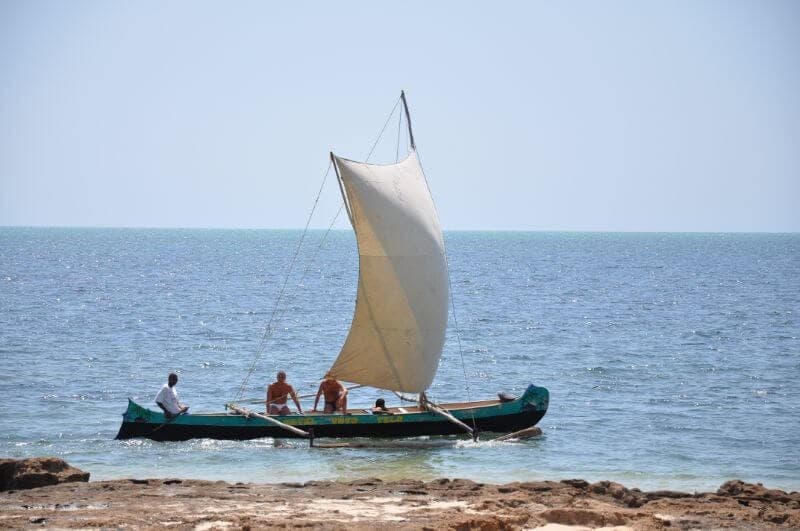
The RN7 ends at Tulear (Toliara). Most travellers continue north to the beaches of Ifaty for a few days of rest. From Tulear, you can fly back to Antananarivo.
How many days and when to go
Driving the whole road one way takes at least seven days with short stops. For a comfortable trip with Ranomafana, Isalo and the beach, plan 10 to 14 days. To save time, fly to Tulear and drive back north.
The dry season from April to November is best. Nights in the highlands are cold from June to August, so pack a warm layer. In the rainy season the road stays open, but walks can be muddy.
See our RN7 destination page for more. Tell us your dates in a request and we'll send you a draft itinerary within 24 hours.
Questions travellers ask
How many days do you need for the RN7?+
Plan 10 to 14 days to drive from Antananarivo to Tulear with time for Ranomafana, Isalo and a beach. With a flight one way, 8 or 9 days works.
How long is the RN7 in Madagascar?+
The RN7 runs close to 1,000 km from Antananarivo to Tulear. Driving times are long because the road winds through the highlands.
Is the RN7 paved?+
Yes, the RN7 is paved along its whole length. Some sections have potholes, so a good driver and an early start make a big difference.
Where can you see lemurs on the RN7?+
The best stops are Ranomafana for bamboo lemurs, Anja for ring-tailed lemurs, and Isalo for ring-tailed lemurs and sifakas. Zombitse is also good for sifakas.