Top things to do in Ranomafana
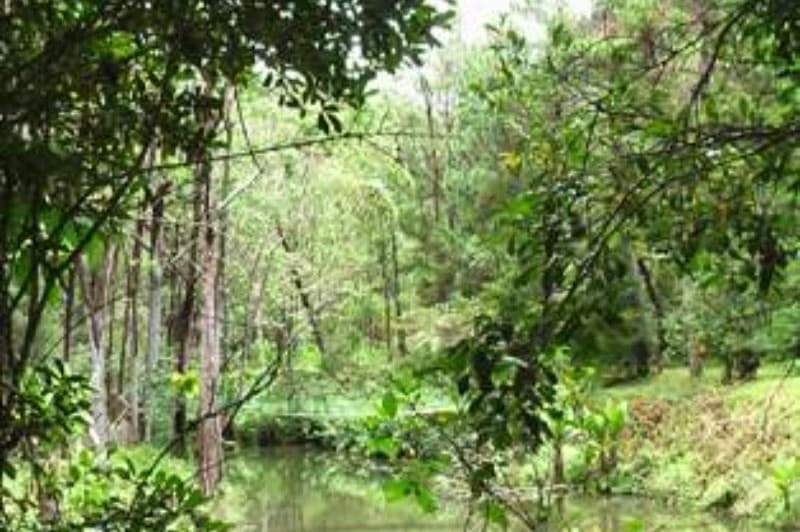
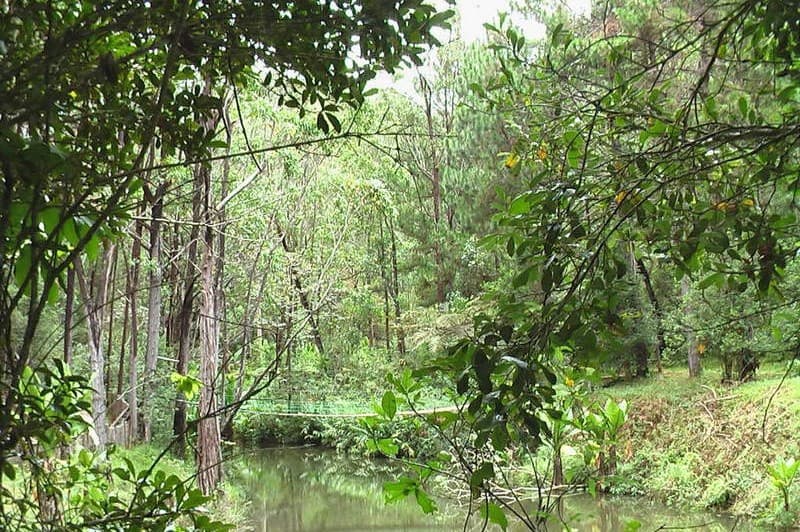
Most visits start at the park entrance on the Talatakely trail. It drops into the valley of the Namorona river, then climbs through bamboo and old forest. Your guide looks for the golden bamboo lemur, the greater bamboo lemur and Milne-Edwards' sifaka. The walk takes three to five hours and has steep, slippery steps.
The golden bamboo lemur was only discovered here in 1986. Its discovery helped create the national park in 1991. It eats giant bamboo, which contains a poison that would kill most animals. Seeing one is the highlight for many visitors.
Longer trails head to waterfalls and viewpoints over the forest, such as the Varibolomena circuit. The higher Vohiparara area, north of the village, is the place for birdwatching. Ranomafana has more than 115 bird species, many found only in Madagascar.
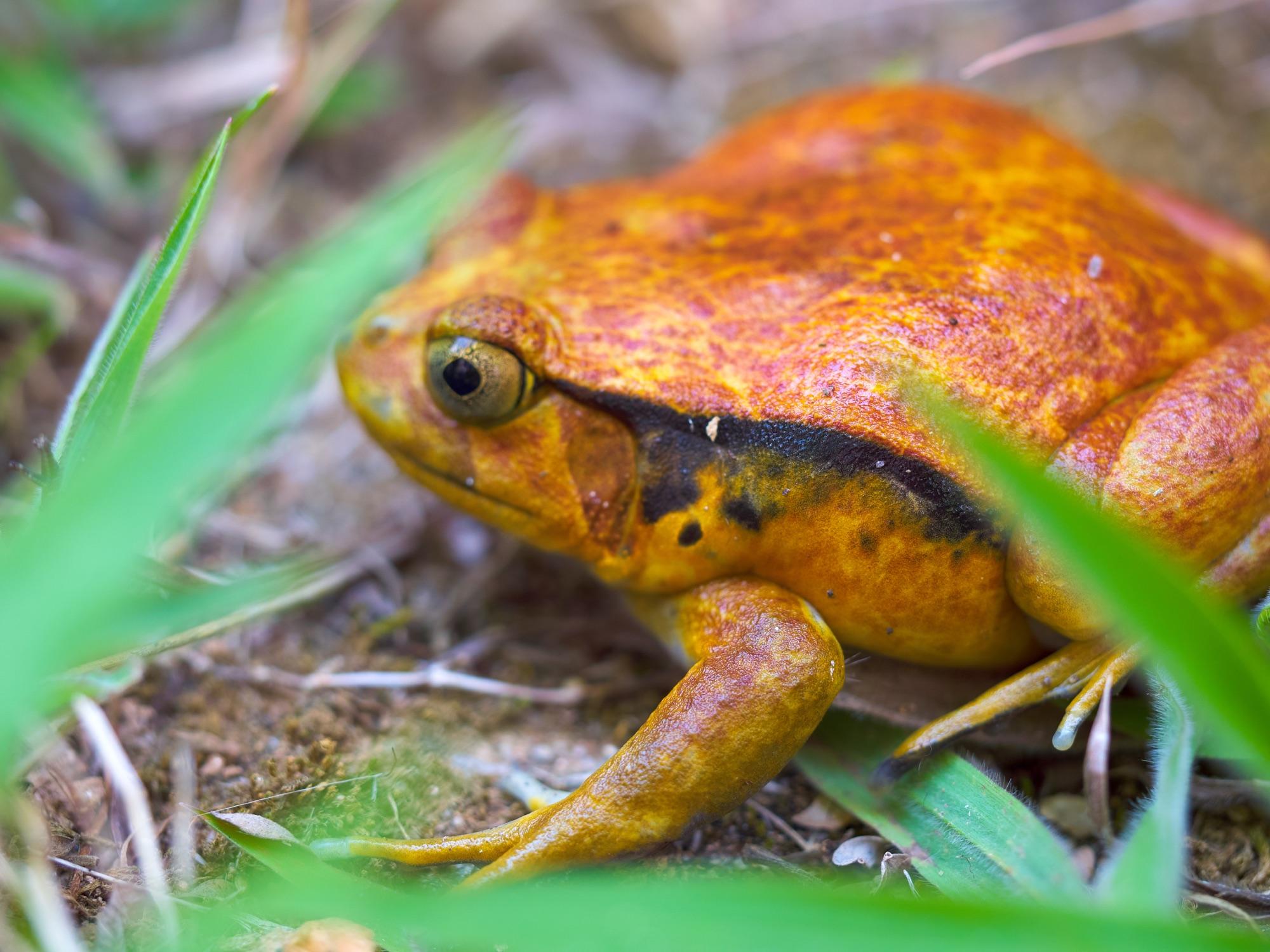
After dark, a guided night walk along the edge of the forest shows you mouse lemurs, tree frogs, leaf-tailed geckos and sleeping chameleons. It lasts about an hour and suits all ages.
Hot springs, the river and village life
Ranomafana means hot water in Malagasy, after the springs in the village. A spa and a warm public pool use the spring water. A soak is a good way to end a muddy day in the forest.
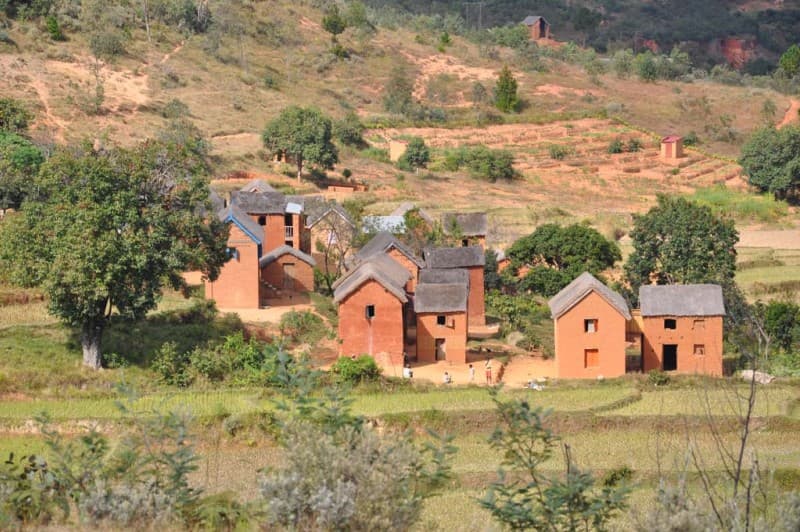
From the road above the village, you can see the Namorona river crash down a waterfall. The village is home to Tanala and Betsileo families, and small markets sell fruit and baskets.
Centre ValBio, a research station on the edge of the park, studies the forest and its lemurs. Its work is the reason Ranomafana is so well known in science.
How long to stay
Two nights work well for most people. Arrive in the afternoon and do the night walk. Spend the next morning on the main trail, then relax in the hot springs.
Add a third night for birdwatching or a long hike. One night is possible on a tight RN7 trip, but you will only get one forest walk.
Best time to visit Ranomafana
Ranomafana is rainforest, and it rains in every month. The most pleasant months are September to December, when the weather is milder and many lemurs have young. See Madagascar in September and October.
April and May are also good, with green forest after the rains. June to August is cool, and nights can be cold. January to March is very wet, and the trails get slippery; read the rainy season guide first.
How Ranomafana fits in your trip
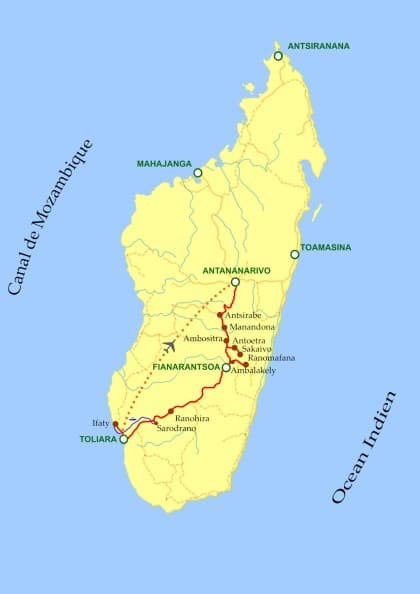
Ranomafana is a classic stop on the RN7 road trip. It usually comes after Antsirabe and before Fianarantsoa. From here the road heads south through Anja, a village reserve for ring-tailed lemurs, to Isalo.
If you already plan Andasibe-Mantadia, Ranomafana adds different lemurs and a wilder feel. See the Ranomafana page, our Ranomafana wildlife tours and trekking tours. Tell us your dates and we'll send you a draft itinerary within 24 hours. Send us a request.
Questions travellers ask
What animals can you see in Ranomafana?+
About a dozen lemur species, including the golden bamboo lemur and Milne-Edwards' sifaka. You also see chameleons, frogs, geckos and many forest birds.
How hard are the Ranomafana trails?+
The main trail is short but steep, with many steps. It can be slippery after rain. Good shoes and normal fitness are enough.
Is Ranomafana or Andasibe better?+
Both are worth it. Andasibe is closer to the capital and best for the indri. Ranomafana has the bamboo lemurs and fits the RN7.
Can you swim in the Ranomafana hot springs?+
Yes. A warm public pool in the village uses the spring water. It is open to visitors for a small fee.