Ride a pousse-pousse through town
Antsirabe is famous for its pousse-pousse, colourful rickshaws pulled by runners. They are everywhere, and a ride is the classic way to see the town. Agree on the price and the route before you set off.
Ask to pass the cathedral, the grand Hôtel des Thermes and the old station. The wide avenues date from colonial times. The town was founded by Norwegian missionaries in the 1870s, drawn by the cool climate and the hot springs.
Watch the artisans at work
Antsirabe is the best place in Madagascar to see small craft workshops. In the zebu horn workshops, artisans cut, heat and polish horn into spoons, bowls and jewellery. Nothing from the animal goes to waste.
Other workshops build tiny bicycles, cars and pousse-pousse models from recycled tins and scrap metal. You can also watch silk weaving, embroidery and stone polishing. Buying straight from the makers is a simple way to support local families.
Visit Lake Tritriva
Lake Tritriva fills the crater of an old volcano west of town. The water is deep green and still, ringed by steep walls. A path leads around the rim, and the walk takes about an hour.
A local legend tells of two young lovers whose families kept them apart, and who chose to stay together in the lake. Some lake rules are fady, a local taboo. Your guide will explain them, such as not swimming in certain spots.
Lake Andraikiba and the countryside
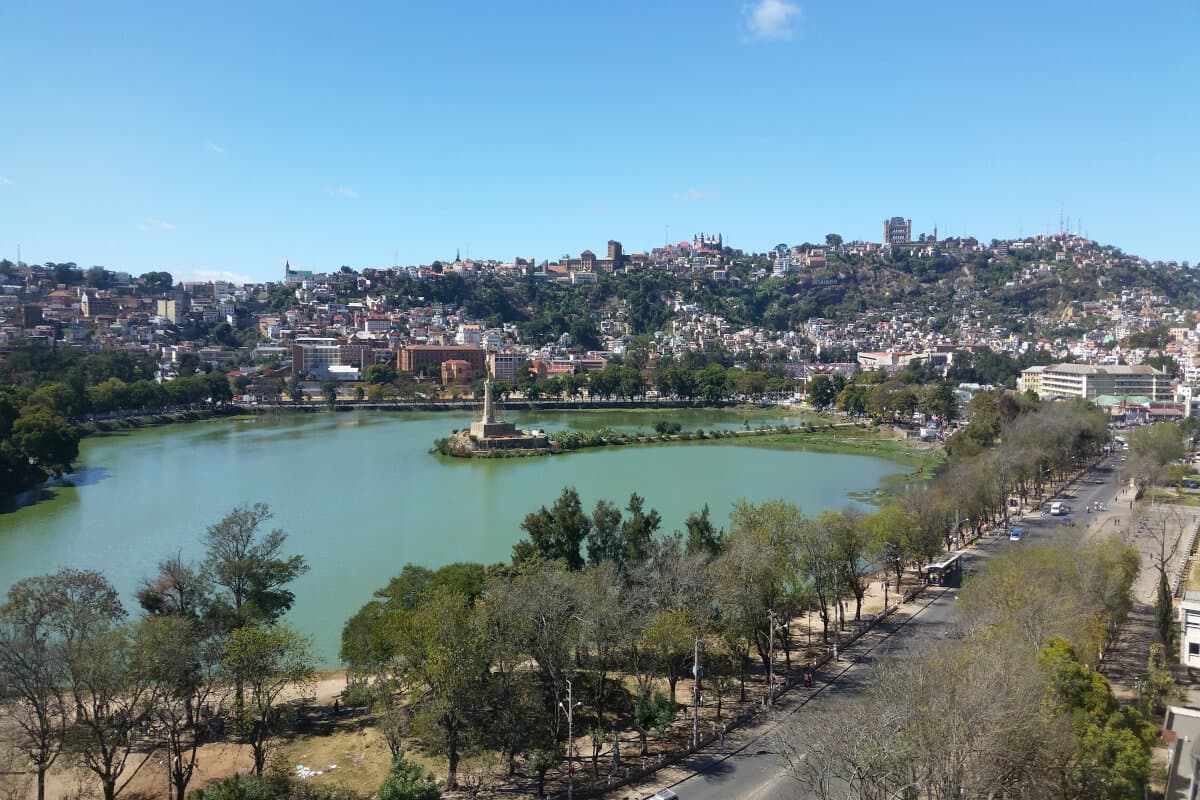
Lake Andraikiba is bigger and closer to town, on the way to Tritriva. It is a nice spot for a walk along the shore and a quiet look at highland life.
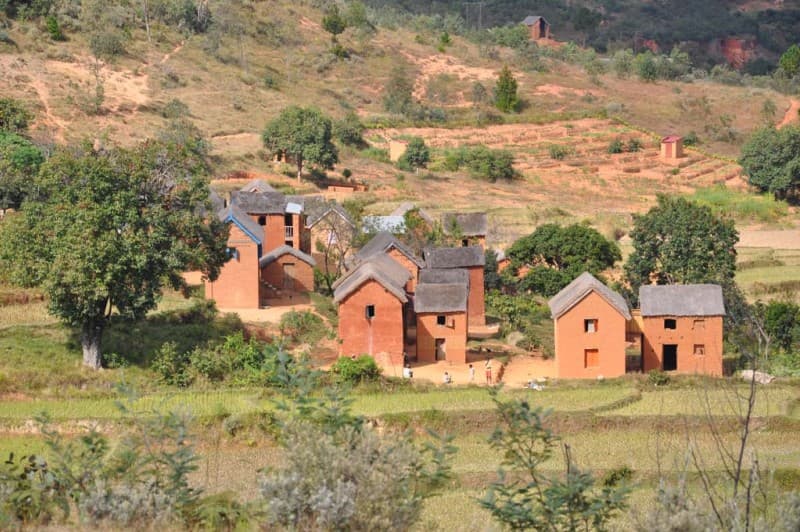
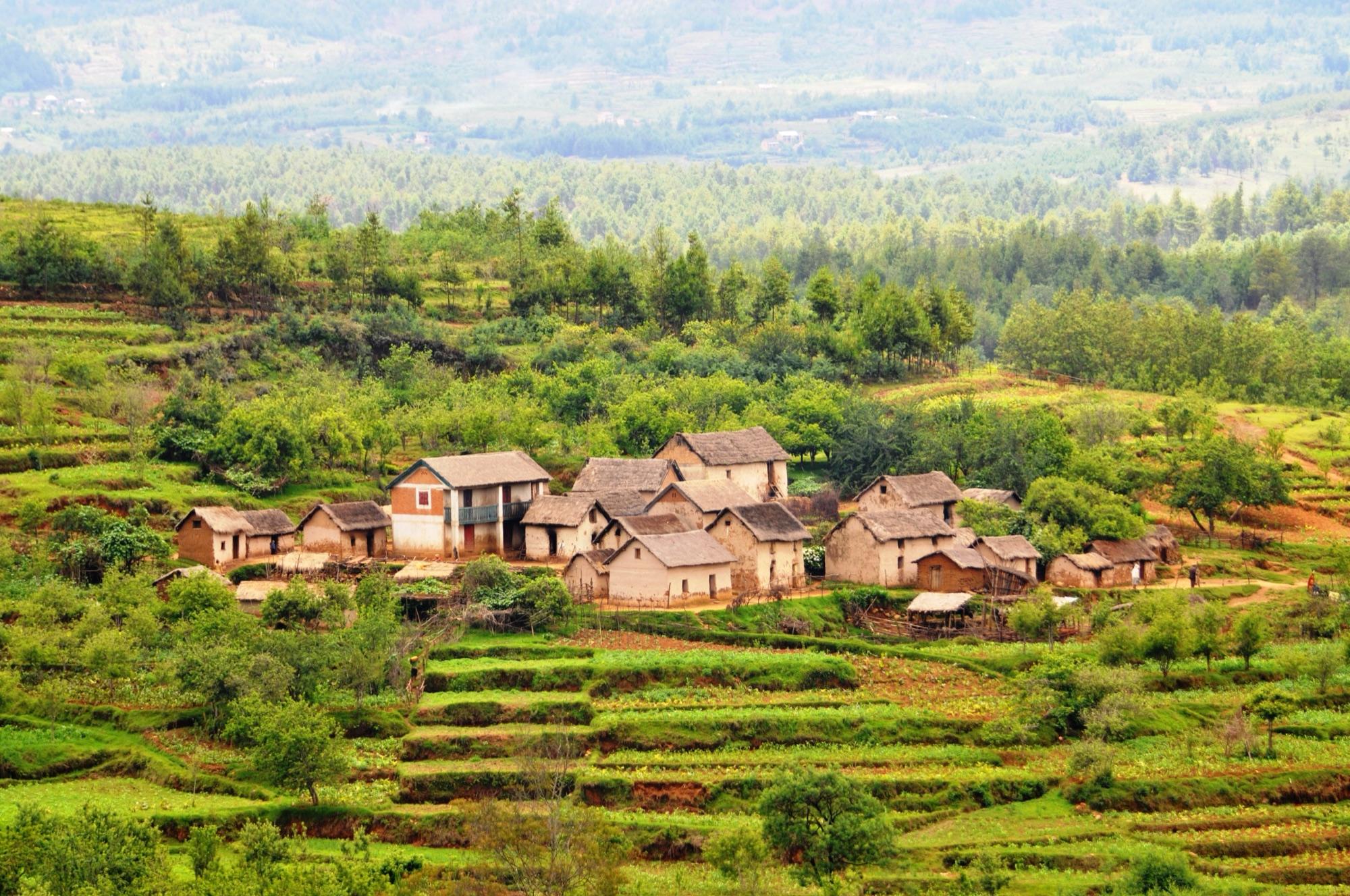
The drive out passes rice terraces, red brick farmhouses and small villages. Further west, the market town of Betafo has lovely terraced rice fields and hot springs. Our Antsirabe page has more ideas.
Market, food and the spa town past
Walk through the busy central market to see fruit, spices and second-hand clothes piled high. Try street snacks like mofo gasy, a small rice cake, with a cup of local coffee.
The hot springs gave Antsirabe its spa town fame and its Malagasy name, which means the place of much salt. The grand Hôtel des Thermes is a reminder of that era.
How long to stay and when to go
One night covers a pousse-pousse ride, a few workshops and Lake Tritriva. Two nights let you add Andraikiba, Betafo and a slow morning at the market.
The dry season from April to November is the best time. From June to August, days are sunny but nights can drop close to freezing, so pack a warm jacket. In the rainy season, the rice fields are bright green, but afternoon storms are common.
How Antsirabe fits in a trip
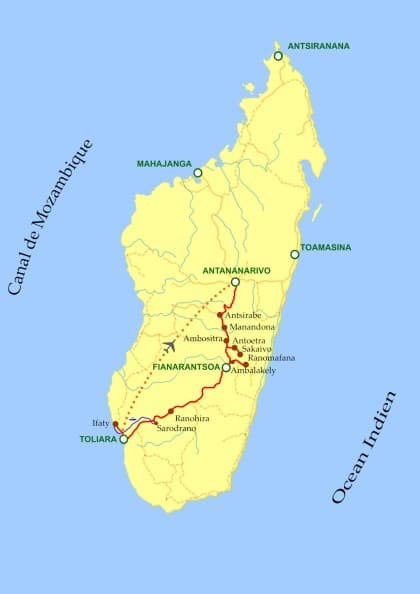
Antsirabe is a few hours' drive south of Antananarivo and the first stop on the RN7 road trip. From here, the road continues to Ambositra, Fianarantsoa and Ranomafana. Some western trips also leave from Antsirabe towards Miandrivazo and the Tsiribihina river.
Read more on our Antsirabe destination page. Tell us your dates in a request and we'll send you a draft itinerary within 24 hours.
Questions travellers ask
Is Antsirabe worth visiting?+
Yes. It is a pleasant overnight stop on the RN7 with real local life, craft workshops and crater lakes nearby. It also breaks up the long drive south.
How far is Antsirabe from Antananarivo?+
Antsirabe is about 170 km south of the capital on the RN7. The drive usually takes three to four hours, depending on traffic.
How long should you stay in Antsirabe?+
One night is enough for the town and Lake Tritriva. Stay two nights if you also want Lake Andraikiba, Betafo and the market.
Is it cold in Antsirabe?+
It can be. The town sits at about 1,500 m, and nights from June to August can be close to freezing. Days are usually mild and sunny.