Why Madagascar's animals are so special
Madagascar split from Africa and India millions of years ago. Its plants and animals then evolved on their own. Most of the island's wildlife lives nowhere else on earth.
Lemurs are the stars. Scientists count more than 100 kinds of lemur, and the number changes as new ones are described. They range from mouse lemurs that fit in your palm to the indri, the largest living lemur.
Many lemur species are threatened, mostly by forest loss. Your park fees and guide fees help pay for protection and give local families a reason to keep the forest standing.
Where to see Madagascar lemurs: the best parks
Each region has its own species, so a good wildlife trip links a few parks. These are the places we use most often.
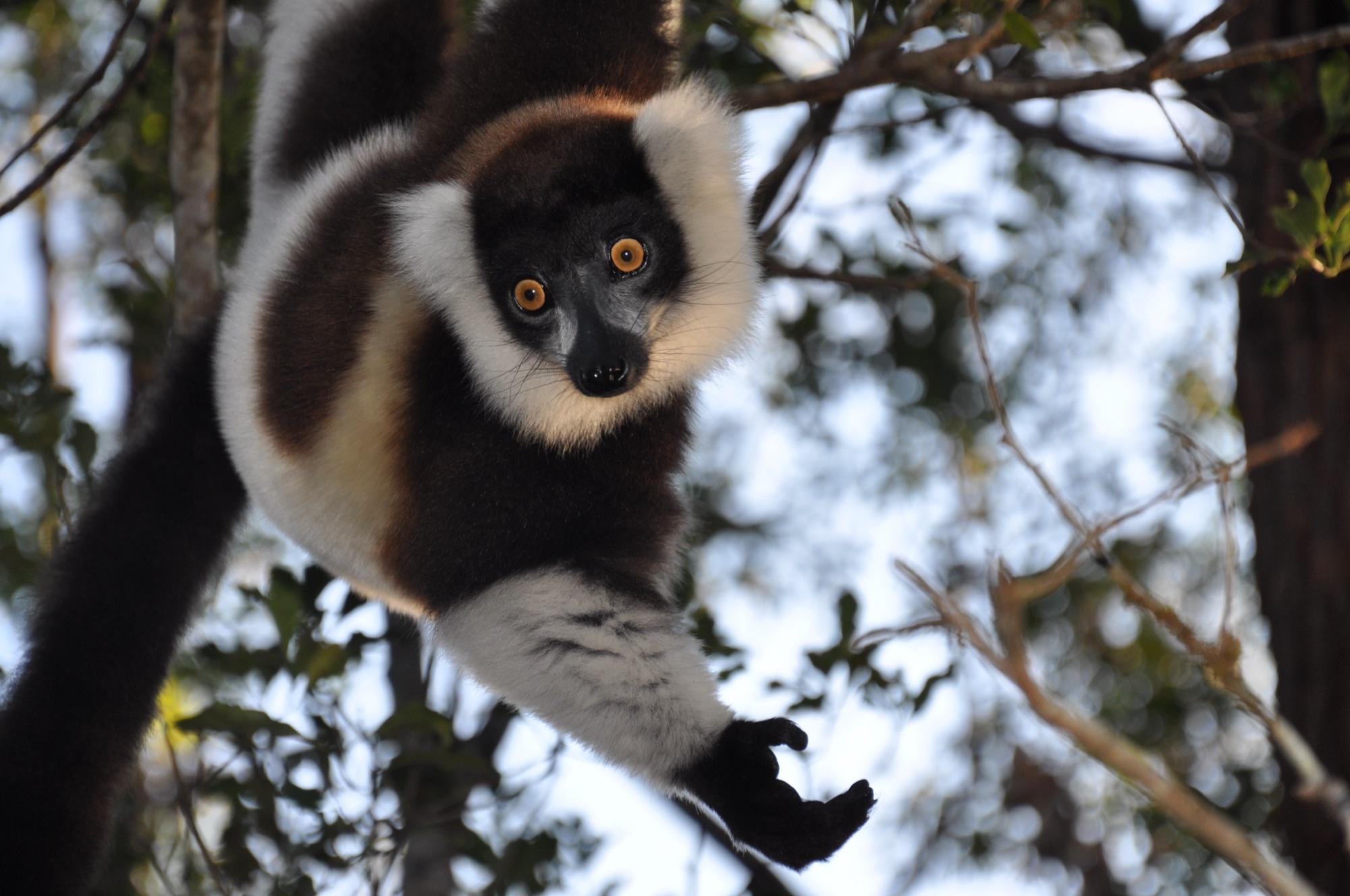
- Andasibe-Mantadia: about 3-4 hours east of Antananarivo. This is the home of the indri, a big black-and-white lemur with a loud, wailing song you hear across the valley in the morning. Mantadia also has the diademed sifaka. Night walks show mouse lemurs and chameleons.
- Ranomafana: a misty rainforest on the RN7. The golden bamboo lemur was discovered here in 1986, and the park was created to protect it. You can also see the greater bamboo lemur, Milne-Edwards' sifaka and red-bellied lemurs.
- Isalo: a sandstone park in the south. Ring-tailed lemurs and Verreaux's sifakas live in the canyons, close to the trails and natural pools.
- Anja: a small community reserve near Ambalavao on the RN7. Villagers run it, and ring-tailed lemurs sit on the granite boulders. It is one of the easiest places to see them up close.
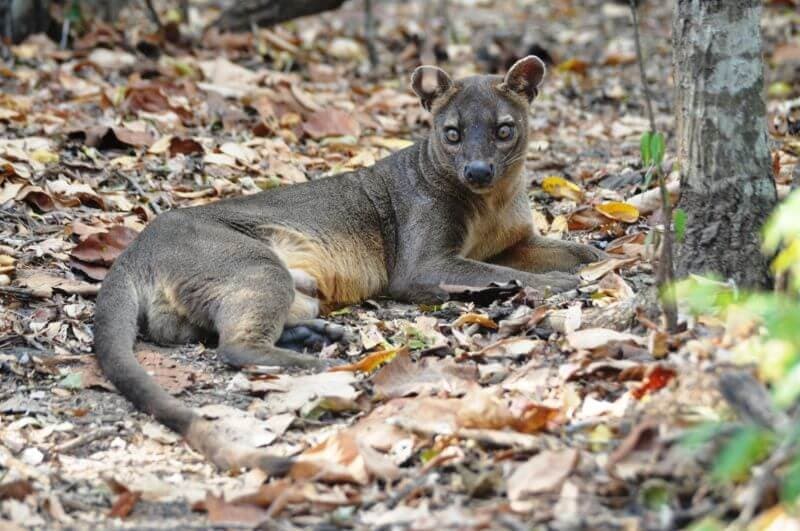
- Kirindy: a dry forest north of Morondava. It is the best place to look for the fossa. Night walks can show Madame Berthe's mouse lemur, the smallest primate in the world, and the giant jumping rat.
- Berenty: a private reserve in the far south, near Fort Dauphin. Its ring-tailed lemurs and Verreaux's sifakas are used to people. The sifakas cross open ground in sideways hops that look like a dance.
- Masoala and Nosy Mangabe: wild rainforest in the northeast. Masoala is the only home of the red ruffed lemur, and Nosy Mangabe is known for the aye-aye and leaf-tailed geckos.
More lemur moments on a classic trip
Some of the easiest sightings come on side trips. On Nosy Komba, near Nosy Be, black lemurs live around the village. At the Palmarium on the Pangalanes canal, many visitors see the aye-aye on an evening visit.
If you follow the RN7, you pass Ranomafana, Anja and Isalo in one road trip. That makes it a good choice for a first visit. Our page on Andasibe wildlife has more on the rainforest east of the capital.
Other Madagascar animals worth looking for
Chameleons are everywhere once your guide shows you how to spot them. Madagascar has about half of the world's chameleon species. They range from Parson's chameleon, as big as a cat's tail, to tiny Brookesia chameleons no bigger than a fingertip.
Frogs are just as varied. The island has more than 300 frog species, almost all of them found only here. Look for bright mantellas in the eastern rainforest and the red tomato frog around Maroantsetra.
Birders come for the vangas, couas and ground-rollers. Madagascar has more than 100 bird species found nowhere else. Ranomafana, Andasibe and the spiny forest near Ifaty are good places to start.
The fossa is Madagascar's largest predator. It looks like a mix of a cat and a mongoose, and it hunts lemurs. Kirindy gives you the best chance to see one.
At sea, humpback whales come to the calm waters off Sainte-Marie from July to September to give birth. Around Nosy Be, whale sharks are often seen from about October to December. Our whale season guide explains the timing.
The best months to see lemurs and wildlife
You can see lemurs all year. The best season depends on what you want to see.
September to November is our favourite time for wildlife. It is warm and dry, the forests are active, and many lemur species have babies. It is also a good window for the fossa in Kirindy.
April to June is green and quiet after the rains. Lemurs are easy to find, and the light is soft for photos.
June to August is cool, especially at night in the highlands and the south. Lemurs are still easy to see, and ring-tailed lemurs sunbathe in the morning. Reptiles are less active, and some small lemurs in the west rest for the cool months.
December to March is hot and wet. Chameleons and frogs are at their most active, but some roads and parks are hard to reach. See our best time to visit guide for the full picture.
How to watch wildlife responsibly
Good wildlife watching is calm and patient. A few simple habits protect the animals and give you better sightings.
- Walk with a local guide. They are required in national parks, and they know where the animals feed and sleep.
- Keep a few metres away and let the animals come to you.
- Never feed or touch lemurs. Human food makes them sick and changes how they behave.
- Stay on the trails and keep your voice low.
- At night, point your torch beside the animal, not into its eyes, and skip the flash.
- Avoid places that keep lemurs as pets or for photos.
- Never buy shells, tortoises, animal parts or wild plants.
Plan a wildlife trip with us
We are a Malagasy team based in Antananarivo, and we have planned private trips since 2005. We link the parks in an order that fits your dates and your pace. Our Malagasy guides and drivers know the forests well.
Tell us which animals you most want to see. Send us a request and we will send you a draft itinerary within 24 hours. You can also browse our wildlife trips or check where each park sits on the map of Madagascar.
Questions travellers ask
Where is the best place to see lemurs in Madagascar?+
Andasibe is the best single stop, because it is close to Antananarivo and has the indri. For variety, combine it with Ranomafana and Isalo on the RN7. For ring-tailed lemurs up close, Anja and Berenty are excellent.
How many lemur species are there?+
Scientists count more than 100 kinds of lemur, and the number changes as new ones are described. All of them live only in Madagascar and nearby small islands.
When is the best time to see lemurs?+
You can see lemurs all year. September to November is the best overall, with warm weather and many babies. April to June is also very good and quieter.
Can I see a fossa in Madagascar?+
Yes, but it takes some luck. Kirindy, north of Morondava, gives the best chance, especially from about September to November.
Is it safe to get close to lemurs?+
Watch from a few metres away and never feed or touch them. Wild lemurs can bite, and contact can pass diseases both ways. A good guide will find you a clear view without crowding the animals.